
A few years ago, we hired a digitisation technician with an impeccable-looking background. Like many of our staff, they held a photography degree. They had also completed heritage imaging internships in a major European library and gallery and had experience with the same Phase One camera systems and Capture One software we use every day. We thought they would settle into the role quickly. Yet something didn’t quite gel.
A day’s image output was lower than our projections. But when we looked at two or three hours of work in isolation, numbers were often fast, and output was accurate. None of us could explain it. This was a dream job for a technician who loved the sector, enjoyed the work, and wanted to succeed. The situation was frustrating for us and worrying for our new hire. The problem seemed to be a question of attention.
Digitisation depends on a level of sustained attention that is not always obvious to people outside the profession. We might be working through hundreds of thousands of pages in bound volumes, processing large collections of maps, or digitising tens of thousands of film negatives. Some projects can continue for weeks or months. Others are completed in a day. While the scale varies, the underlying requirement remains consistent: staying present to the work.
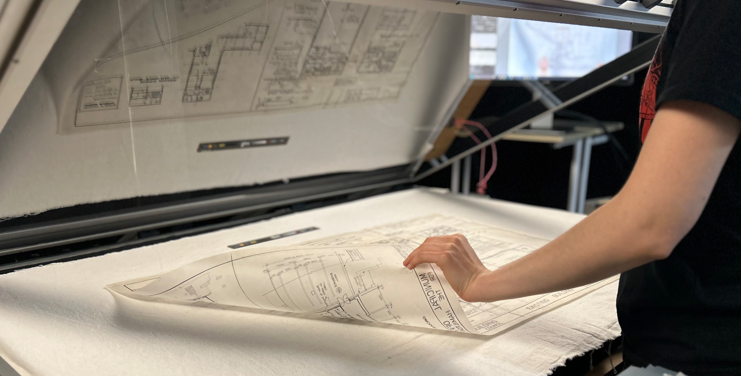
On one project, an experienced operator accidentally ‘digitally clipped’ the edge of imagery in a 35mm negative during capture. Throughput was exceeding expectations, and nothing immediately suggested this error. It was only when another team member began post-processing the images that the issue was identified. By that point, around 2,000 images required recapture.
Experiences like this have shaped the way we approach quality assurance. Final quality checking is always completed by somebody other than the person who performed the original capture. Processing and review are phased throughout production so issues can be identified before they become entrenched. Equipment and workspaces are regularly calibrated, allowing images from the same collection created years apart to remain visually consistent. Operators are encouraged to take breaks, move around and step away from their workstations when needed.
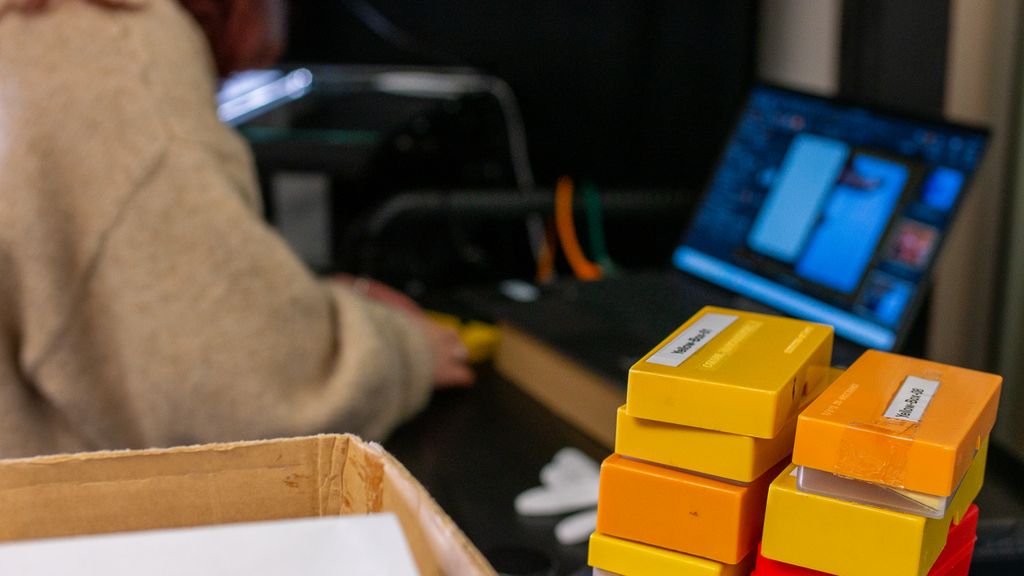
The systems matter, but so does the human dimension.
Digitisation can appear straightforward when viewed from the outside, but operators are managing a surprising number of variables. While material handling requirements, client specifications, metadata standards and file naming conventions vary from project to project, quality requirements do not.
We often use the term being “in flow” to describe an ideal working rhythm: being able to remain absorbed in a task for extended periods without losing focus. Psychologist Mihaly Csikszentmihalyi explored this idea extensively, describing the conditions under which people become deeply engaged in an activity.
Creating consistency, and clearly identifying expectations and exceptions, helps operators work in a state of flow by reducing the mental effort required not only to perform a task but also to navigate the processes surrounding it. This peripheral effort is sometimes described as cognitive load. The more energy people spend managing interruptions, switching context, remembering procedures or reorienting themselves, the less capacity remains for the work itself.
In discussions about throughput, our new staff member described task switching as particularly challenging. Our practice of rotating staff between projects to keep skills current and introduce variety into the working day is intended to support both capability development and engagement. In this case, however, frequent transitions created friction. Faced with unfamiliar work, this operator described overthinking decisions, becoming anxious about performance, and sometimes disengaging from the task altogether.
Fortunately, we had a large flatbed scanning project that was expected to continue for several months. The job would be repetitive, providing an opportunity to focus on throughput and efficiency without repeatedly changing context. This framework helped stabilise production processes and throughput soon exceeded projections. At the end of this project, our technician was ready to transition back into more varied camera-based work.
The scanning project demonstrated how powerful consistency of context could be. However, when work again became more varied, some of the same challenges re-emerged. Rather than viewing this as a setback, the operator decided to approach the problem differently. Instead of accepting overall production targets, they began taking jobs apart, breaking a single fee for a completed digital image into its constituent parts: preparation, handling, capture, processing, file naming and quality assurance.
Armed with this deeper understanding, they examined the assumptions behind our time-and-motion methodology and began tracking specific performance aspects. Targets were written into a brightly coloured notebook making progress on larger projects easier to measure because activities were no longer experienced as a single piece of work.
By the time our staffer received an ADHD diagnosis, the issues that had led to booking the assessment were largely overcome.
“There was definitely some relief in having an explanation. At the same time, I realised I’d already been building ways to work around the things I’d found difficult. The diagnosis helped me understand why those approaches were working, but it was hugely satisfying to realise that I’d worked out a lot of those strategies for myself.”
It is worth noting that the work itself had not changed, but our technician’s relationship with it had.
This operator’s productivity issues disappeared long ago. In fact, the deeper understanding of project costs and fees developed through this process has since led to an interest in the assessment and quoting side of our business.
Experiences like this continue to inform our approach to the work.
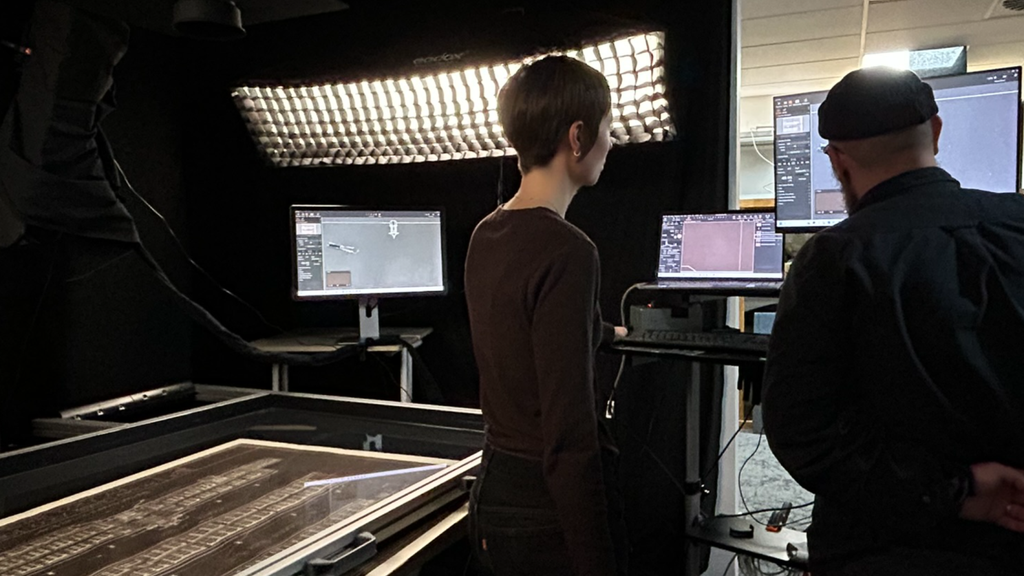
In digitisation, we often focus on equipment, specifications and quality standards, and rightly so. Yet much of the work also depends on creating environments in which people can engage consistently with what is in front of them.
Attention may begin with the individual, but experiences like this suggest it does not end there. While sustained attention comes more easily to some people than others, our experience in this instance showed that it is also a skill that can be practised and developed through a combination of self-awareness, effective workflows and a supportive environment.