
For decades, libraries, archives, and cultural institutions have played a vital role as custodians of knowledge, holding records, safeguarding heritage, and responding to requests with care and expertise. What has shifted over time is not that role, but the way people engage with it.
Historically, access was mediated. A patron submitted a request, and a librarian worked through catalogues and physical material to locate the answer. Digitisation changed the pace of this work, making collections easier to search and retrieve, while reducing the need to handle fragile originals. The interaction itself, however, remained largely unchanged.
Recollect the cloud-based collection management system, emerged from a more gradual shift in thinking, shaped by libraries already working with digitised material and beginning to see potential beyond faster response times. Designed for libraries, archives, and cultural organisations to manage, preserve, and present digital collections, while providing a public-facing environment for discovery and engagement.
While early digitisation improved efficiency – allowing a librarian to locate a school yearbook, a historic photograph, or a community record with far greater speed – it also highlighted a change in expectation – a growing interest in environments where collections could be explored more freely, without relying entirely on staff-led searching.
The Shift to Self‑Service Discovery
This change was less about access alone and more about how collections are experienced. Recollect supports this by creating public-facing digital environments where users can search, navigate, and follow connections between items on their own terms. In practice, this allows collections to be approached less as a set of individual records and more as an interconnected body of material.
A photograph might lead to a person, which links to a place, which opens into a broader set of related records.
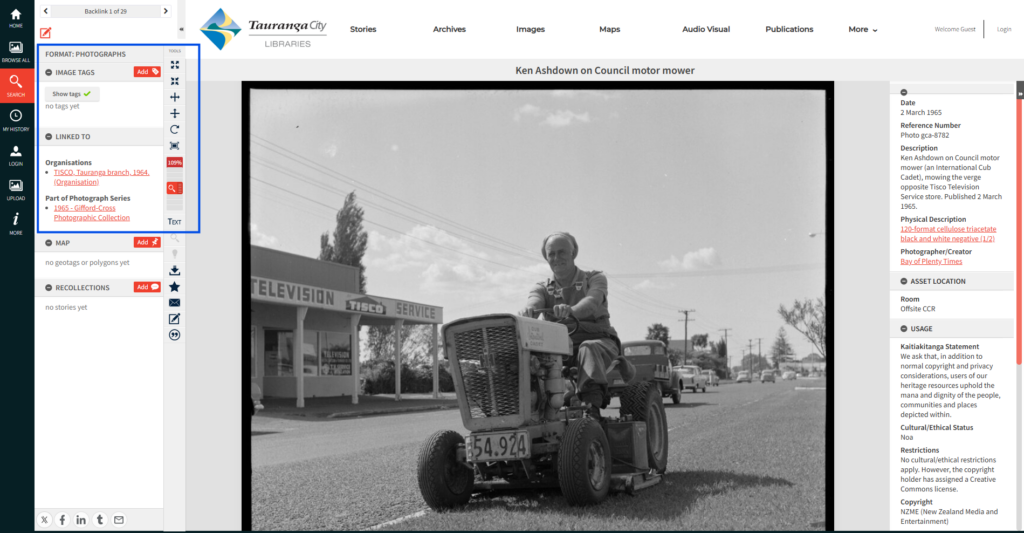
These pathways are shaped through metadata and relationships between items, allowing users to discover context as they explore.
This kind of navigation is already visible in collections such as Tauranga City Libraries’ Pae Korokī, where thousands of taonga are connected in a way that allows users to move through the stories of Tauranga Moana over time, following their own lines of enquiry rather than a predefined path.
Beyond Access: Enabling Community Voice
As access has opened up, so too has the question of how collections are shaped.
Institutional records continue to provide the structured and authoritative foundation of an archive, but they rarely capture the full context surrounding an item. Much of that knowledge sits with communities, families, and individuals whose experiences extend beyond the formal record.
Recollect was designed to hold both of these perspectives within a single environment.
The curated record remains intact, supported by consistent metadata and professional practice, while a complementary layer allows for contribution through tagging, commentary, or the inclusion of additional material.
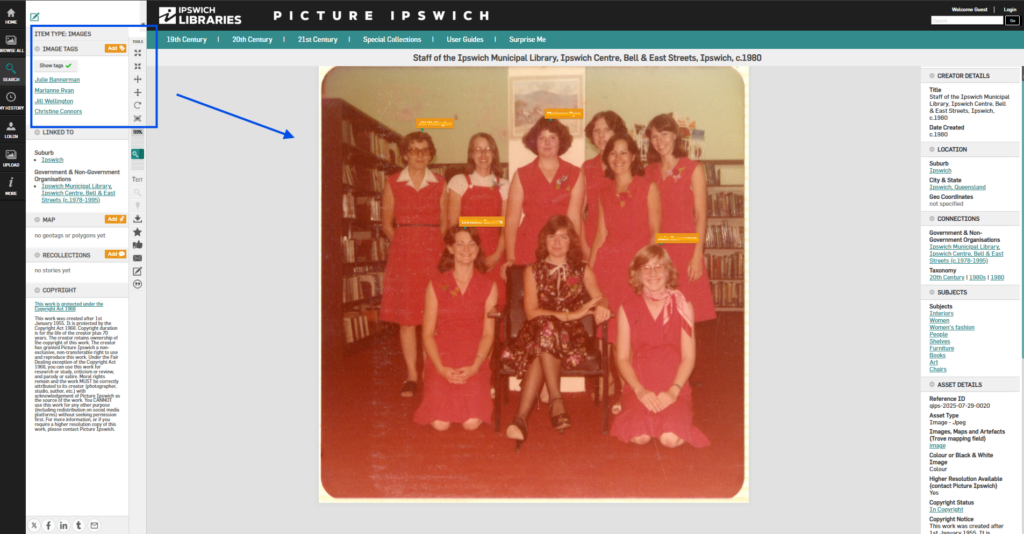
Example of image tagging. Picture Ipswich Recollect Site, Staff of the Ipswich Municipal Library, Ipswich Centre, Bell & East Streets, Ipswich, c.1980.
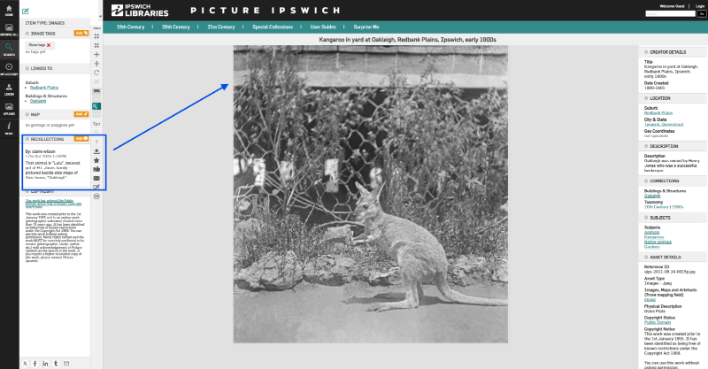
Over time, this creates collections that feel more complete. Official description and lived experience sit alongside one another, adding depth without displacing the role of either.
In community‑driven environments such as Picture Ipswich, (Ipswich Libraries’ Recollect site, where the Ipswich community saves and shares historical resources) this approach has resulted in a shared digital archive where historical records, photographs, oral histories, and personal collections are brought together in a single space shaped by both institutional stewardship and public contribution.
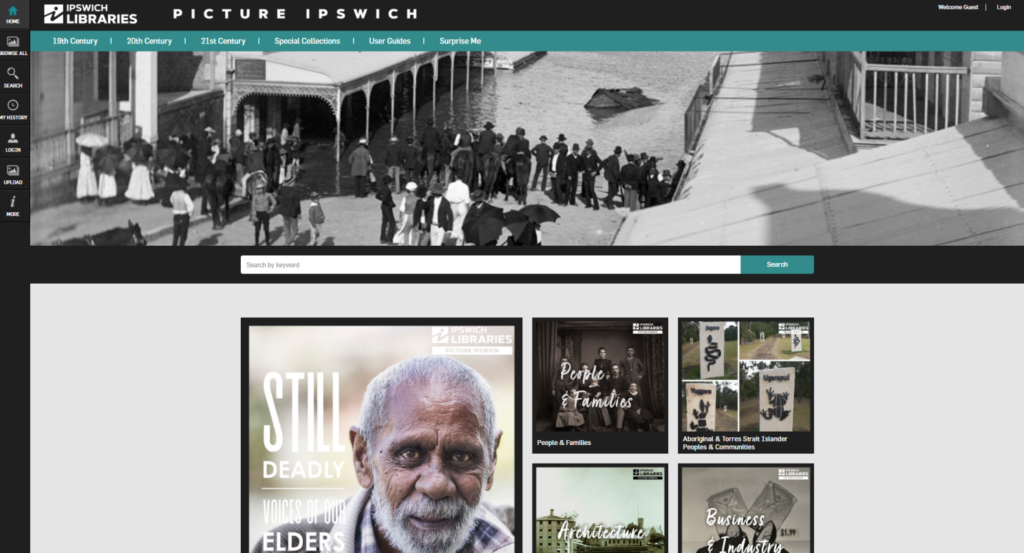
Users are able to add tags, comments, and their own recollections, allowing context to accumulate gradually as the collection is used.
A Platform for Narrative Ownership
Digital collections are increasingly used to maintain provenance, context, and narrative in a more structured way. This is particularly relevant in an environment where information is often encountered without clear origin or attribution.
Recollect supports this through a single, managed system where collections can be organised, connected, and made accessible, while still allowing for appropriate controls around visibility and use.
Permissions-based access enables organisations to determine how material is shared, ensuring that collections can be open where appropriate and carefully managed where necessary.
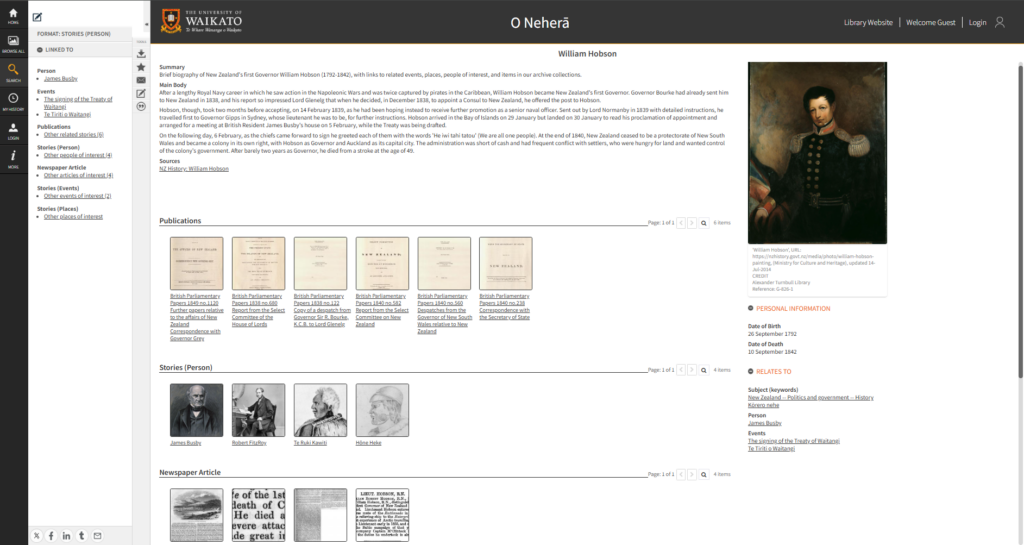
This balance is important in a range of contexts. In research environments, it supports deeper engagement with material, as seen in the University of Waikato’s O Neherā, where collections are linked and contextualised to allow users to work across related items rather than within isolated records.
Expanding Beyond Libraries
Although Recollect developed out of library-led needs, its use now extends across a wide range of organisations.
Research institutions, schools, corporate archives, and community groups are all working with collections that carry both informational and cultural value. The requirement is consistent: material needs to be well managed, discoverable, and able to retain its context as it moves between users.
In practical terms, this has supported everything from genealogical research through to organisational storytelling.
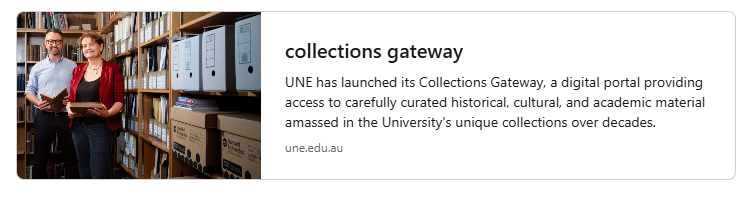
At the University of New England, for example, the Collections Gateway brings together archival, museum, and special collections into a single digital environment, allowing researchers, students, and community users to search and work with material that was previously tied to physical access. Thousands of items can now be discovered and used remotely, with the ability for site visitors to contribute insights and personal photographs, further extending the context of the collection over time.
From Collections to Connections
What emerges across these examples is not a replacement of existing practice, but an extension of it. Archives, records and heritage collections continue to be preserved, described, and managed with care. At the same time, they are becoming more connected – across items, across users, and across different layers of knowledge.
Recollect sits within this movement, supporting collections that can be navigated, revisited, and, where appropriate, contributed to over time. What began as a response to improving access to digitised material now reflects a wider shift, where collections are not only held, but actively engaged with as part of an ongoing relationship between institutions and the communities they serve.
If you’re exploring new ways to engage your stakeholders with your collections, or thinking about how your organisation presents and preserves its story, our team at NZMS welcome a conversation.