When organisations contemplate a change of location or software system, staff can find themselves facing overflowing shelves or archival storage facilities, creaking server capacity, and offsite storage pressures, and a request to review their business needs. This is especially true for businesses established before our current primarily digital era.
What was previously working well may no longer be the right solution. The question of digitising in-house versus outsourcing invariably arises at this point, especially when customer or stakeholder demand intersects with limited access.
Choosing how and what to digitise and whether to create an in-house project or work with a specialist partner, can be surprisingly complex, especially for established businesses carrying a legacy of paper-based records beyond just BAU material that can be dealt with via retention and disposal rules.
For these organisations, the major challenges can arise with other material formats.
- The legacy minute books
- Undigitised reference reports
- Fragile documents
- Bound volumes
- Large plans and maps
- Film negatives
- Audiovisual recordings
- And historically significant objects that sit outside the everyday workflow.
These formats often require specialist handling, conservation expertise, very accurate image capture, or equipment that most internal teams don’t have on hand. Deciding whether to digitise such material in-house or externally usually comes down to the specific drivers behind the project.
Common Drivers Include

1. Office relocation or downsizing
When physical space is being reduced, archives become harder to accommodate. Digitisation reduces physical footprint while improving access.
2. Marketing and brand storytelling
Modern brand narratives increasingly draw on heritage collections: early photography, archived campaigns, founder stories, visual design evolution, or a significant date, spark renewed interest in an organisation’s story.
3. Customer Demand
Some paper-based records, plans, drawings, or photos form part of foundational documentation for ongoing projects and come to public attention.
4. Commissioned books or history projects
Authors and researchers need durable, accessible versions of critical documents and visual material. Digitisation enables analysis without handling fragile originals.
5. Risk management
Water damage, fire, mould, and accidental loss are real threats. Digitisation reduces vulnerability and provides long-term preservation security.
6. Distributed teams and digital workflows
Hybrid work models may highlight gaps in available online resources. Digitisation supports equitable access across locations.
7. System upgrades or digital transformation
New EDRMS, CMS, or DAM systems often highlight the need for additional accessible digital records.
Introducing a Hybrid Approach to Digitisation Projects
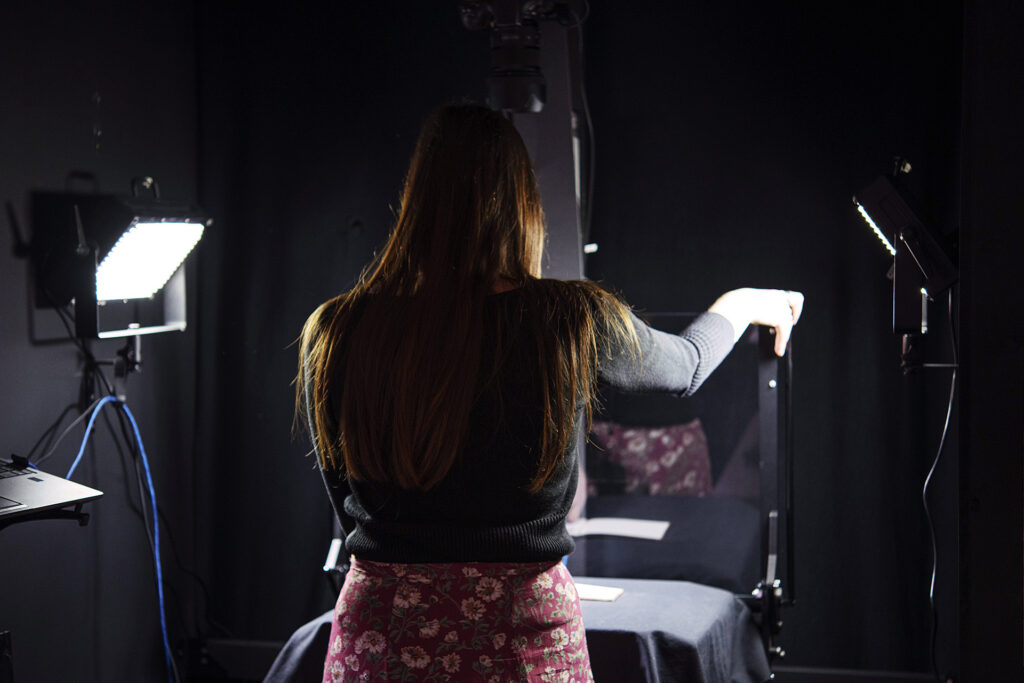
Doing a cost/benefit analysis will likely show diminishing returns on digitising everything. Further, some access to some material is more urgent than for others. These factors often lead to a hybrid approach, where outsourcing digitisation of high-demand material might be worthwhile and supported by installing appropriate scanning equipment for longer-term in-house work. For organisations committed to building internal capability, this can be a smart long-term investment.
However, few collections are entirely straightforward. Considering the cost of equipment and the training for staff who usually have other responsibilities, it makes sense to parcel out complex material such as VHS or audio cassettes, heavy bound volumes, oversized and fragile plans and so on. In other words, it may not make sense to setup inhouse resourcing for all and every format.
Even when a good portion of material is to be digitised in-house, there is often a broader need for guidance:
- Project scoping
- Workflow planning
- Quality standards
- Realistic timelines
- And clarity around what should and should not be digitised.
This is where an expert partner like NZMS can assist by enabling an organisation to achieve its goals with confidence. In this case, a hybrid model is a highly effective way forward. With over 35 years of experience, NZMS works alongside organisations in this way, helping to maximise ROI by ensuring internal effort is focused where it is most efficient and specialist digitisation is applied where it delivers the greatest long-term value.
To be successful, these ‘hybrid’ projects always begin with a robust scoping phase to map the full collection, identify priorities, develop realistic cost options, and design a plan that blends in-house capability with outside support. And once scoped, plans may combine short, focused project work with multi-year activities, depending on the drivers at play.
Digitisation is a strategic decision, not just a technical one. Every collection has a different risk profile, and every organisation has different levels of capacity. If digitisation is on your agenda this year, talk to our experts about how a hybrid approach could work for your organisation.