
Most people have a fairly clear idea of what they might find in a public archive or historical collection and may list: photographs, correspondence, reports, minute books, plans, registers, audio-visual material and documents. In other words, material that helps tell the story of a person, organisation or community.
However, archives can also contain confronting material not intended for wider public access. For example, a photographic archive assembled over decades may contain images documenting fatal accidents, natural disasters, crime scenes, war service, institutional life or events that were deeply distressing for the people involved. Personal papers may include correspondence written during periods of grief, illness or family crisis. Organisational records can contain evidence of workplace accidents, complaints, disputes, investigations or decisions that had significant consequences for the people affected by them.

The Digitisation Perspective
Much of this material survives because it formed part of a person’s life, an organisation’s activities or a community’s history, but it was never created with an archive in mind, and definitely not originally intended for wider dissemination, let alone via digitisation and online access. The existence of confronting material within archival collections is well understood. Less often considered is the heritage digitisation context, where staff may encounter that material repeatedly and at scale. As part of their day-to-day work, digitisation staff work systematically through entire collections, often numbering many thousands of items. Unlike most other collection users, their role requires sustained engagement with every item selected for capture, regardless of subject matter or content.
A recent example from NZMS was the digitisation of photographs of medical procedures that formed part of an important historical clinical record. And, of course, while written accounts may document abuse, loss, conflict or personal hardship, imagery can be especially confronting. The immediacy of a photograph capturing the aftermath of an accident or the effects of a natural disaster can have a lasting impact on those who see it.
Lessons from across the sector
Within the archives, library, museum and records sectors, procedures and policies have been developed to support staff dealing with these situations. Many of the practical considerations were discussed in a recent webinar titled “Psychological Hazards in Collections” and hosted by NZCCM (New Zealand Conservators of Cultural Materials) in partnership with Te Papa’s National Services Te Paerangi. Presenters from the New Zealand Police Museum, Canterbury Museum and the Australian War Memorial shared insights from their work.
Part of the session was a confidential and unrecorded panel discussion, providing attendees with a safe space to raise specific experiences. While approaches differ between organisations and collection types, the underlying issues were familiar: preserving access to the record while managing the responsibilities associated with it. Topics covered included the emotional and professional challenges, principles of ethical stewardship and practical ways to support staff.
At NZMS, some projects involve digitising confronting material. Typically, our clients brief us beforehand, and that information informs project planning and discussions before digitisation begins. Staff are given the option to opt out of a project if they prefer. Even with that preparation, there are times when material proves confronting in unexpected ways.
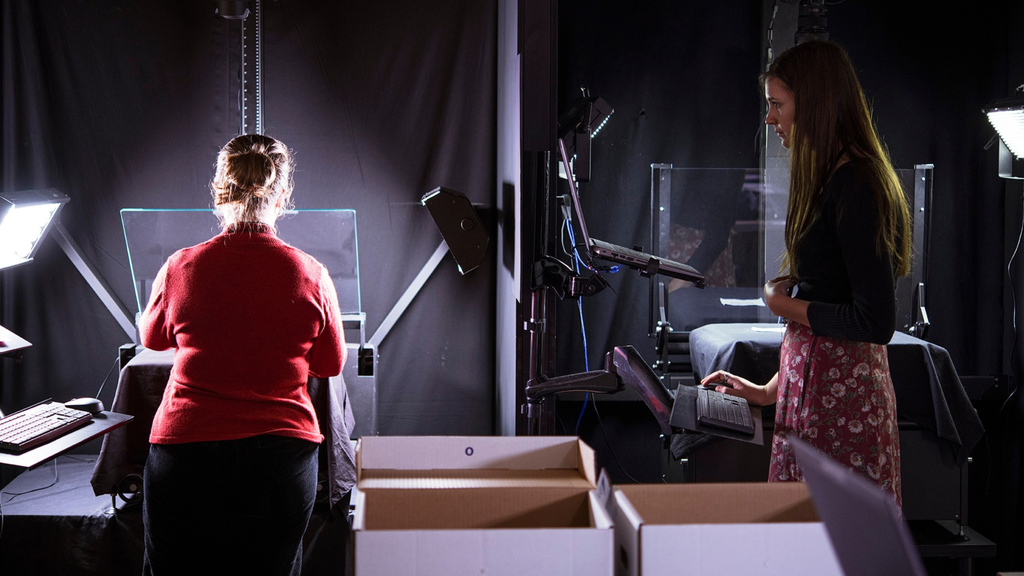
Recently, for example, we digitised a series of rural and environmental film negatives that were, for the most part, idyllic but occasionally revealed scenes of predation and death. Experiences like these have reinforced the importance of flexible workflows that recognise not everyone responds to the same type of content in the same way.
While the public often encounters collections through a compelling photograph, a significant document or a well-known story, collection staff and digitisation technicians encounter everything around it as well. That broader perspective brings with it challenges that are not always visible from the outside, requiring care and sensitivity both for the people whose stories are being surfaced and for those working with the material.